

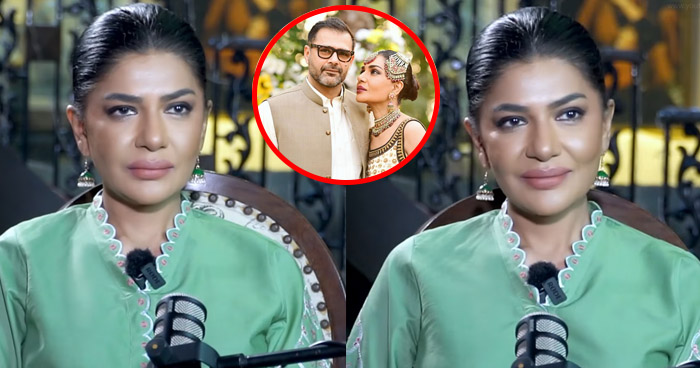
Pakistani model, host, and actor Iffat Omar has once again caught attention with her candid take on how television dramas portray wedding nights and how different reality can be from the fantasy shown on screen.
Iffat Omar, who began her showbiz journey as a teenage model before moving into acting, has long been admired for her strong screen presence and outspoken personality. Over the years, she has appeared in several well-known projects, including Nangay Paaon, Ghulam Gardish, Mohabbat Aag Si, Aye Musht-e-Khaak, and Aangan.
The actor has recently stepped away from acting, citing weak characterization and regressive storytelling in current television dramas. These days, she is more active through her podcasts, where she often discusses social issues, entertainment trends, and cultural expectations with blunt honesty.
During a recent podcast episode, Iffat Omar spoke about how wedding nights are depicted in Pakistani dramas. She said such scenes are often overly romanticized on television, while the real experience can be much simpler and more ordinary.
Sharing her own wedding night memory, Iffat Omar said, “Let me tell you what I did on my wedding night. I was sitting on the floor and counting my salami money, and then we slept. I was just curious about how much money I had been given.”
Her comment sparked a light-hearted discussion about the gap between real life and the dramatic moments often created for television audiences. In many dramas, wedding night sequences are used as major emotional scenes, filled with tension, romance, hesitation or conflict. Iffat Omar’s remarks suggested that real life does not always follow those dramatic patterns.
Writer and actor Adeel Afzal, who was also part of the conversation, shared his own experience of writing such a scene for an upcoming play. He explained that even for writers, creating a wedding night sequence that feels fresh and different can be difficult because viewers have seen the same treatment many times before.
Adeel said, “I have recently written a play where there is a wedding sequence. I was writing a wedding night scene and it took me three days to think about how to make it different. I have to include at least three scenes because the audience watches it and loves such moments, especially when the couple doesn’t get intimate, so they wait for it. We have to give subtle hints. We haven’t been able to create a truly memorable wedding night sequence.”
The discussion highlighted how Pakistani dramas continue to depend on familiar romantic situations, while artists and writers are increasingly questioning whether these scenes need more realism and originality.